

Vermiculite insulation removal in Calgary
Last reviewed November 2026
Vermiculite removal in Calgary mostly comes up in houses from the 1940s to the early 80s. Pop the attic hatch. If you see loose, pebbly insulation, grey-brown to gold, with a slightly shiny, layered look like tiny accordions, that's probably vermiculite.
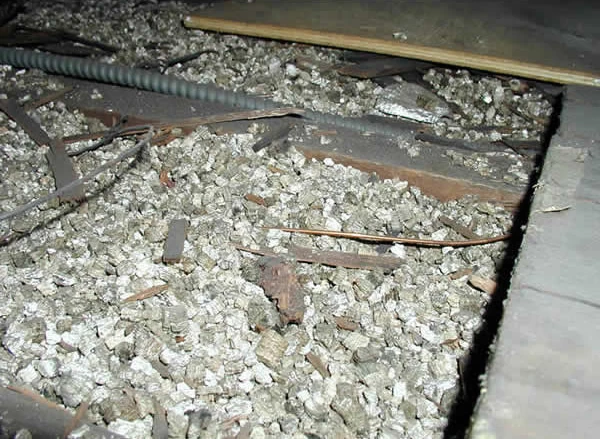
Is it Zonolite?
Most vermiculite insulation in Canada came from one mine in Libby, Montana, which ran from the 1920s until 1990. Its ore contained asbestos, and the insulation was sold mainly as Zonolite. Between 1977 and the mid-1980s, the federal Canadian Home Insulation Program paid homeowners to upgrade their insulation, and vermiculite was one of the eligible products. That's why it shows up in so many Calgary bungalows that otherwise have nothing unusual about them.
Not every bag of vermiculite contained asbestos. But you can't tell which one you've got by looking.
What to do in the meantime
Health Canada's advice is to leave it alone. If it's sealed off from the living space, it poses very little risk.
- Don't store boxes in the attic or go up there more than you have to
- Don't let kids play in the attic
- Seal gaps around light fixtures, the hatch and ceiling cracks so nothing sifts down
- Don't sample it yourself. Health Canada recommends a professional do it.
- Tell any electrician or installer before they go up
Why testing vermiculite is tricky
Asbestos isn't spread evenly through loose-fill vermiculite, so a sample can come back clean while the next handful wouldn't. Labs use a more sensitive method for vermiculite than for other materials. Typical pricing is about $950 plus GST for a full-home survey that includes the attic vermiculite, so you get the rest of the house checked at the same time. Even so, don't plan on skipping the test. Under Alberta OHS rules, removal crews need lab results showing the material contains asbestos before they can work on it, so they won't simply assume it's positive and start. Testing first and sending the report along with your quote request is the fastest way to a firm price. We can help you set that up.
A vermiculite job, before and after
Before
1,000 square feet of attic over a 1950s bungalow. Four to six inches of vermiculite, some of it sitting on top of later fibreglass batts. Pot lights in the kitchen ceiling with gaps around them. The hatch is in the hallway closet.
During
The closet and hallway get sealed in poly with a zipper entry. A negative air unit runs out a window. The bulk comes out through an industrial HEPA vacuum with its hose run up through the hatch. Then the slow part: hand-detailing between joists and along the top plates where it hides.
After
Bare ceiling drywall from above, ceiling penetrations sealed, clearance check done. New blown-in insulation goes on top. Two to three working days for the removal is typical, depending on the roof pitch and how easily the crew can move around in the attic.
What it costs
A good removal quote lists air monitoring and disposal as their own line items, so you can see exactly what you're paying for. Re-insulation usually isn't included: removal crews handle the hazardous material, and an insulation company blows in the new insulation afterwards.
Bigger attics, low roof pitch and vermiculite that's fallen down inside walls all push it up. See Calgary asbestos removal prices for the rest.
Putting fibreglass on top doesn't solve it
Lots of Calgary attics have vermiculite on the bottom and a later layer of batts or blown fibreglass on top, added when someone wanted better R-value. The vermiculite is still there, and now it's harder to remove, because the crew has to take out the top layer as contaminated waste too. If you're thinking about topping up attic insulation in an older house, check what's underneath first.
Places vermiculite hides besides the attic
It drifts. Over decades it sifts down through gaps in the top plates into wall cavities, and it can pile up around pot lights and the attic hatch frame. In some older houses it was poured into the hollow cores of concrete block walls as insulation. If a wall is coming apart in a house that has vermiculite upstairs, expect a little to fall out, and plan the containment for it.
After removal: re-insulating
Once the attic is clear, it's the easiest time to air-seal the ceiling from above. Seal around pot lights, plumbing stacks, wiring holes and the hatch before new insulation goes in. In Calgary's climate that pays back in warmer rooms and fewer ice problems at the eaves, and it stops dust from the new insulation sifting down too.
Selling or buying with vermiculite
Home inspectors flag it, and buyers ask questions. If you're selling, talk to your realtor about disclosure before you list. If you're buying, a removal quote during your inspection period gives you a real number to negotiate with.
Common questions about vermiculite
Is vermiculite insulation dangerous if you leave it alone?
Vermiculite that stays sealed in the attic is a low risk. The danger comes from disturbing it: fibres get into the air when it's moved, swept or sifts through gaps into the house. Health Canada's advice is to leave it alone, keep people out of the attic, seal cracks and openings in the ceiling below, and not store things up there. If you're planning any work that would disturb it, have it tested and removed first.
Does all vermiculite contain asbestos?
No, but much of the vermiculite in Canadian attics came from a mine in Libby, Montana, sold as Zonolite, and that ore was contaminated with asbestos. You can't tell by looking, so treat it as if it contains asbestos until a lab says otherwise. Removal crews need those lab results before they'll work on it anyway, so testing is the first step.
How much does vermiculite removal cost in Calgary?
Most Calgary bungalows come in around $10,000 to $16,000 for attic vermiculite removal, with small or partial jobs starting around $4,500. Testing, air monitoring and disposal add to that, and new insulation is usually a separate quote from an insulation company. Low roof pitch, a large attic and vermiculite that has fallen into the walls all push the price up.
Can I remove vermiculite insulation myself?
In Alberta, homeowners aren't legally barred from removing asbestos from their own home, but vermiculite is one of the worst materials to try it on. It's loose and light, so it drifts through ceiling gaps into the rooms below and is very hard to clean up completely. Health authorities strongly recommend a professional crew with containment, negative air and HEPA vacuums.
Found vermiculite in the attic?
Send a photo through the hatch. Don't climb in to get a better one.